

Welcome to Foursquare
This is a place where I think out loud.
I’m not a foreign policy expert. I don’t have a blue checkmark or a TV hit to my name. I build things for a living, read widely, and pay attention to what’s actually happening—not what people say is happening.
I’m a classical liberal in the old sense: individual liberty, boundaries that create accountability, inputs over outcomes, skepticism of anyone who’s too sure of themselves. I think in frameworks. I try to see around corners. Sometimes I’m wrong, but I’d rather be wrong and thinking than right and tribal.
I started this because I keep having conversations—with friends, with my spouse, with myself at 10pm—where I’m working through something and realize I want to write it down. Geopolitics. Strategy. Philosophy. Whatever I can’t stop chewing on.
The name comes from an old word that means solid, planted, unwavering. It’s also a type of American house—practical, built to last, no ornamentation for its own sake. That’s the vibe I’m going for.
I’m anonymous because I want the ideas to stand on their own. If the thinking is sharp, that should be enough. If it’s sloppy, you’ll see it.
So here’s what this looks like in practice.
Maduro Is Gone. Now What?
What Actually Happened
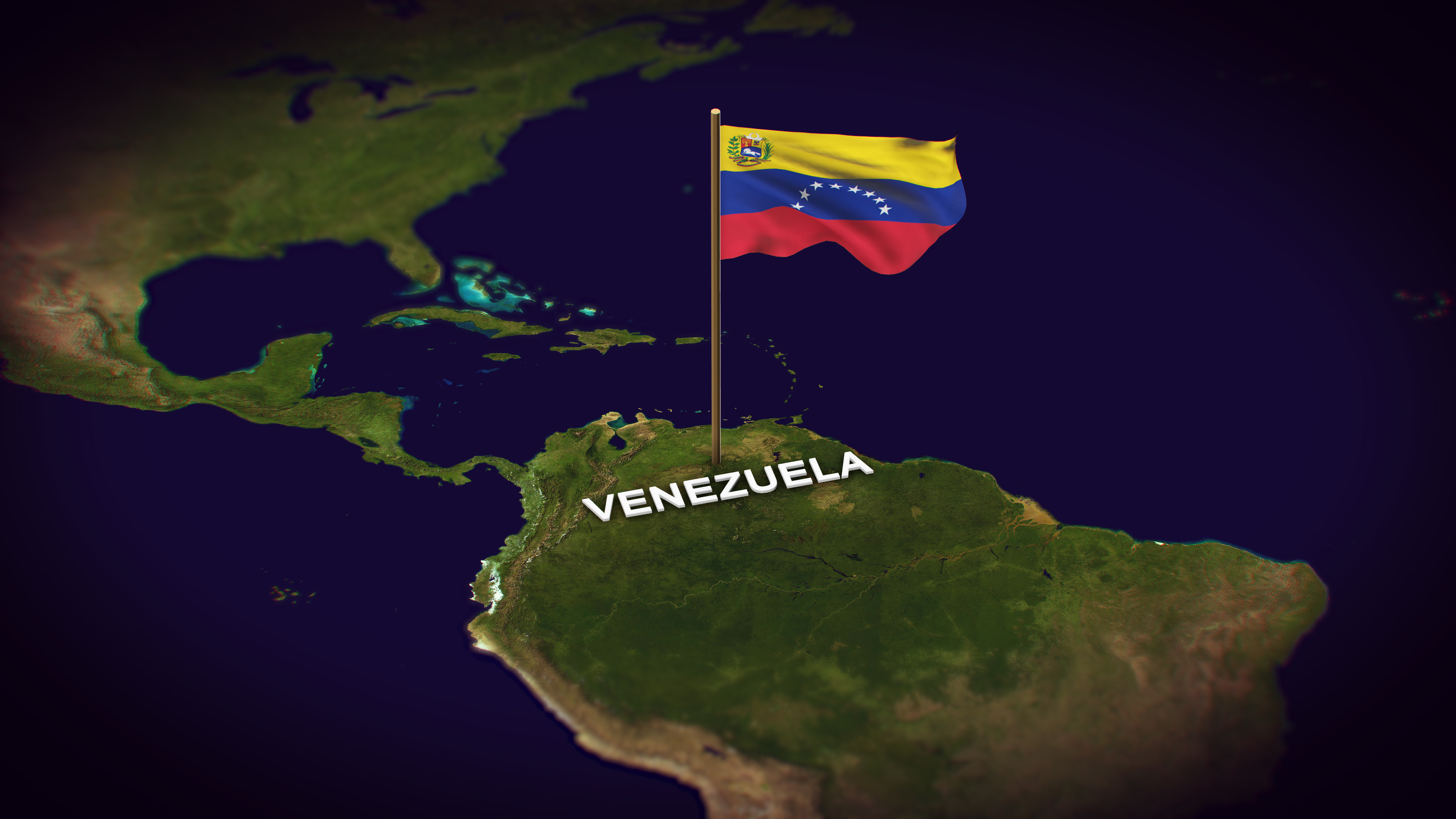
On Saturday morning, the United States executed one of the most precise military operations in recent memory. In about two hours, Delta Force operators captured Venezuelan President Nicolás Maduro and his wife from Caracas and had them on a Navy ship headed for New York.
This wasn’t impulsive. It was months in the making—150 aircraft, 20 bases, the largest U.S. military presence in Latin America since Haiti in 1994. The carrier strike group had been positioned since November. Basing agreements with Trinidad and Tobago were signed quietly. The “drug boat” strikes of the past few months now look less like interdiction and more like rehearsal.
Maduro’s in a Brooklyn jail facing narco-terrorism charges. He’ll be arraigned Monday.
But here’s what I think most of the coverage is missing.
Everyone’s overreacting to the wrong thing
Trump said the U.S. would “run” Venezuela until a proper transition happens. Cue the freakout: Iraq 2.0, imperial overreach, no exit strategy.
But since when do we take any single Trump sentence as policy? The man speaks in impulses. He regurgitates whatever the last person told him, without tact or awareness of how it’ll land.
What “we’ll run the country” probably means: Rubio’s in contact with the transitional figures, the carrier group stays offshore as leverage, there are conditions for sanctions relief, and if Venezuela doesn’t hold real elections, there’s more where that came from.
That’s not occupation. That’s coercive diplomacy with teeth.
Boz’s Substack has a smart early take on the uncertainty here—his point that “honest analysis means it’s ok to say ‘I don’t know’” is worth remembering. But I think we can sketch the outlines.
The real play is already in motion
Here’s what I think is actually happening:
Edmundo González is the legitimate president. He won the July 2024 election by a two-to-one margin before Maduro stole it. He’s been in exile in Spain, but he attended Trump’s inauguration last January and has been touring friendly Latin American capitals collecting recognition. The U.S. already recognizes him as the rightful leader.
María Corina Machado is the opposition’s engine—2025 Nobel Peace Prize winner, charismatic, popular. She was smuggled out of Venezuela with U.S. help in December after 11 months in hiding. She’s already announced she’ll serve as González’s VP. Within hours of Maduro’s capture, she released a statement calling for González to assume the presidency immediately.
That statement was pre-written. They were waiting for a go-signal.
Delcy Rodríguez, Maduro’s VP, is currently the nominal head of government in Caracas. Trump keeps weirdly suggesting he might work with her. But she’s publicly demanding Maduro’s release and calling him “the only president.”
My read: she’s a placeholder being managed. The U.S. needs someone in Caracas right now who controls the ministries, the cops, the utilities. They’re telling her: cooperate and maybe you don’t end up in a cell next to your old boss. Meanwhile, González and Machado get positioned to return.
This is the Panama playbook. In 1989, we grabbed Noriega, installed the guy who’d actually won the election, kept a presence for stability, and left. Panama’s been a functioning democracy since. This Substack piece does a thorough comparison of the two operations—worth reading if you want the historical parallels laid out.
Why hemispheric buffer matters
Here’s the part I think most commentators are glossing over, either because it sounds too “imperialist” to say out loud or because they’re not thinking structurally.
The United States is blessed with geography. Two oceans protect us from the great power conflicts that have consumed Europe and Asia for centuries. (Tomas Pueyo’s Global Chessboard piece makes the case that whoever held this land was destined to become a superpower—“the inevitable empire.”) But oceans aren’t enough. To be truly secure, you need buffer zones—friendly or at least non-hostile territory to your north and south that prevents adversaries from projecting power into your neighborhood.
This isn’t new thinking. It’s the Monroe Doctrine, articulated in 1823 and enforced, with varying degrees of enthusiasm, ever since. The core idea: the Western Hemisphere is our sphere of influence, and we don’t tolerate hostile foreign powers setting up shop here.
For most of the 20th century, this was about keeping out European colonial powers, then Soviet influence. Today it’s about the new axis: China, Russia, and Iran.
Venezuela under Maduro was becoming a forward operating base for all three. Russian military aircraft. Iranian drones. Hezbollah operations. Chinese loans and infrastructure investments. A sanctions-busting hub for all of them. This wasn’t a neutral neighbor having a rough decade—it was a hostile asset being cultivated 1,300 miles from Miami.
From that lens, the question isn’t “should we have done this” but “why did we wait so long?”
The Trump administration’s National Security Strategy explicitly invoked a “Trump Corollary” to the Monroe Doctrine. You can roll your eyes at the branding, but the substance is serious: the U.S. is reasserting that hostile powers don’t get to operate freely in our hemisphere.
Trump, being Trump, called it the “Donroe Doctrine.” Whatever. The point stands.
Our government’s primary job is to let everyone inside our borders be as free as possible. But maintaining that freedom requires doing what’s necessary outside our borders to ensure we stay secure. Oceans on two sides. Friendly neighbors to the north and south. That’s the architecture of American security, and Venezuela was a hole in it.
The regional alignment matters
This isn’t just about Venezuela. It’s about the hemisphere.
Javier Milei in Argentina knew this was coming. Days before the strike, he said he’d support U.S. intervention—“even with troops if requested.” Argentina immediately blocked entry for Maduro-linked officials. Milei’s been working with Trump on Venezuela for months, including a quiet operation to extract political prisoners from the Argentine embassy in Caracas.
Rubio’s broader project is pushing back the “pink tide”—the wave of left-wing governments across Latin America that tend to align with China and Russia. Milei is the anchor of a regional realignment: proof that radical free-market reform can work, a staging ground for coordination, and diplomatic cover so this isn’t just “the Americans.”
Brazil, Mexico, and Colombia are pissed. They’re condemning the operation publicly. But they’d already cooled on Maduro after he blatantly stole the 2024 election. Their condemnation is partly genuine, partly domestic politics.
The axis powers—Russia, China, Iran—are loudly upset and quietly impotent. Venezuela was their client state in our hemisphere, sitting on the world’s largest oil reserves. They’ve just lost it, and there’s nothing they can do.
David Blackmon’s energy-focused Substack frames this as a “$17 trillion reset of global geopolitics.” That might be hyperbole, but not by much.
The risks are real but manageable
This could still go wrong.
Chavismo isn’t dead. Maduro’s gone, but his interior minister Diosdado Cabello is still out there. The armed militias haven’t disarmed. Cuban intelligence is embedded in Venezuelan security services.
The economy is a crater. 80% poverty, worthless currency, collapsed infrastructure. Someone has to rebuild this, fast enough that the political window doesn’t close.
Trump could screw it up. If he gets bored, undercuts Rubio’s diplomacy, or picks fights on Truth Social that complicate the transition, the careful sequencing falls apart.
But here’s why I’m cautiously optimistic: the pieces are in place. The legitimate election winners are ready. The military operation was flawless, which suggests the planning is serious. Rubio—who actually knows Venezuela—appears to be running this. And the Venezuelan people, 70% of whom voted for change, are desperate for it to work.
CSIS has a solid rundown on the day-after challenges if you want the think-tank perspective.
The bottom line
The coverage is mostly asking “what’s the plan?” as if this were chaotic improvisation.
I think the plan is pretty clear: install González and Machado, hold elections to ratify it, stabilize the economy enough to prevent a refugee crisis, keep the axis powers out, get American oil companies back in, and leave.
Not utopia. Functional. And critically—a buffer secured.
The next 90 days will tell us if I’m right. Watch for whether González actually returns, whether elections get scheduled, and whether Trump can resist making this about himself.
My bet: this is closer to Panama than Iraq.
We’ll see.
—Foursquare